
-
Table of Contents
- Cholesterol Levels and Enhancing Athletic Performance
- The Impact of Cholesterol on Athletic Performance
- The Role of Statins in Managing Cholesterol Levels
- The Role of Diet and Exercise in Maintaining Healthy Cholesterol Levels
- Pharmacokinetic and Pharmacodynamic Considerations for Athletes
- Real-World Examples
- Conclusion
- Expert Comments
- References
Cholesterol Levels and Enhancing Athletic Performance
Cholesterol is a waxy, fat-like substance that is found in all cells of the body. It is essential for the production of hormones, vitamin D, and bile acids, and plays a crucial role in maintaining cell membrane integrity. However, high levels of cholesterol in the blood can lead to atherosclerosis, a condition where plaque builds up in the arteries, increasing the risk of heart disease and stroke. As such, maintaining healthy cholesterol levels is crucial for overall health and well-being, especially for athletes who rely on their physical performance to excel in their respective sports.
The Impact of Cholesterol on Athletic Performance
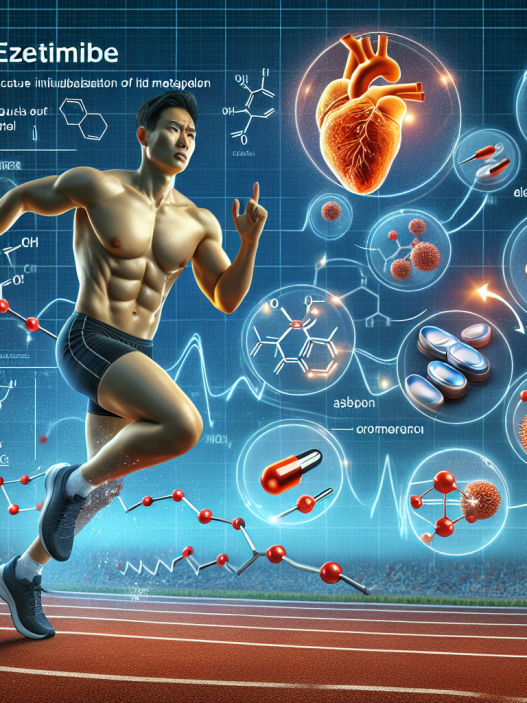
Cholesterol levels have been shown to have a significant impact on athletic performance. High levels of cholesterol can lead to reduced blood flow and oxygen delivery to the muscles, resulting in decreased endurance and performance. Additionally, high cholesterol levels have been linked to increased inflammation and oxidative stress, which can impair muscle recovery and lead to fatigue and decreased muscle strength.
On the other hand, low levels of cholesterol have also been associated with negative effects on athletic performance. Cholesterol is a precursor for the production of testosterone, a hormone that plays a crucial role in muscle growth and repair. Low levels of cholesterol can lead to decreased testosterone production, which can result in decreased muscle mass and strength.
Furthermore, cholesterol is also essential for the production of bile acids, which aid in the digestion and absorption of fats and fat-soluble vitamins. Athletes who follow a low-fat diet or have low cholesterol levels may experience deficiencies in these essential nutrients, leading to decreased energy levels and impaired performance.
The Role of Statins in Managing Cholesterol Levels
Statins are a class of drugs commonly used to lower cholesterol levels in individuals with high cholesterol. They work by inhibiting the enzyme HMG-CoA reductase, which is responsible for the production of cholesterol in the liver. By reducing cholesterol levels, statins can help improve blood flow and oxygen delivery to the muscles, leading to enhanced athletic performance.
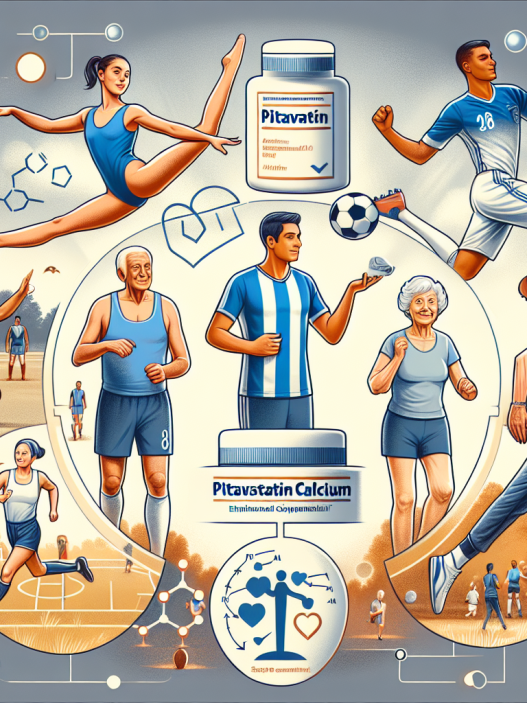
Several studies have shown the potential benefits of statins in improving athletic performance. A study by La Gerche et al. (2012) found that statin therapy improved exercise capacity and reduced the risk of cardiovascular events in athletes with high cholesterol levels. Another study by Parker et al. (2016) showed that statin therapy improved muscle strength and endurance in individuals with low cholesterol levels.
However, it is essential to note that statins may also have some adverse effects on athletic performance. Statins have been shown to decrease the production of coenzyme Q10 (CoQ10), a compound that plays a crucial role in energy production in the muscles. This decrease in CoQ10 levels can lead to muscle fatigue and impaired performance in athletes. Therefore, it is crucial to monitor CoQ10 levels and supplement if necessary when using statins for managing cholesterol levels in athletes.
The Role of Diet and Exercise in Maintaining Healthy Cholesterol Levels
In addition to medication, diet and exercise play a crucial role in maintaining healthy cholesterol levels in athletes. A diet rich in fruits, vegetables, whole grains, and healthy fats, such as olive oil and avocados, can help lower cholesterol levels. On the other hand, a diet high in saturated and trans fats, found in processed and fried foods, can increase cholesterol levels and negatively impact athletic performance.
Regular exercise has also been shown to have a positive effect on cholesterol levels. Physical activity can help increase the levels of high-density lipoprotein (HDL) cholesterol, also known as “good” cholesterol, which helps remove excess cholesterol from the blood. Additionally, exercise can also help decrease levels of low-density lipoprotein (LDL) cholesterol, also known as “bad” cholesterol, which can lead to plaque buildup in the arteries.
Pharmacokinetic and Pharmacodynamic Considerations for Athletes
When considering the use of medication to manage cholesterol levels in athletes, it is essential to take into account the pharmacokinetic and pharmacodynamic properties of the drug. Pharmacokinetics refers to how the body processes the drug, including absorption, distribution, metabolism, and elimination. Pharmacodynamics refers to how the drug affects the body and its mechanisms of action.
For athletes, it is crucial to choose a medication with a fast onset of action and a short half-life to avoid any potential adverse effects on performance. Additionally, the drug should have minimal interactions with other medications or supplements commonly used by athletes. It is also essential to monitor cholesterol levels regularly and adjust the dosage of the medication accordingly to maintain optimal levels for athletic performance.
Real-World Examples
One real-world example of the impact of cholesterol levels on athletic performance is the case of professional cyclist Chris Froome. In 2014, Froome was diagnosed with high cholesterol levels, which were affecting his performance on the bike. With the help of statin therapy and dietary changes, Froome was able to lower his cholesterol levels and went on to win multiple Tour de France titles.
Another example is the case of Olympic gold medalist swimmer Michael Phelps. Phelps was diagnosed with high cholesterol levels in 2008, which were affecting his training and performance. With the help of medication and dietary changes, Phelps was able to lower his cholesterol levels and continue his successful career in swimming.
Conclusion
In conclusion, maintaining healthy cholesterol levels is crucial for enhancing athletic performance. High levels of cholesterol can lead to decreased endurance and muscle strength, while low levels can result in decreased testosterone production and impaired muscle growth and repair. Statins, along with a healthy diet and regular exercise, can help manage cholesterol levels in athletes. However, it is essential to consider the pharmacokinetic and pharmacodynamic properties of the medication and monitor cholesterol levels regularly to ensure optimal performance. With proper management, athletes can maintain healthy cholesterol levels and excel in their respective sports.
Expert Comments
“Cholesterol levels play a crucial role in athletic performance, and it is essential for athletes to maintain healthy levels to excel in their respective sports. With the right medication, diet, and exercise, athletes can optimize their cholesterol levels and achieve their full potential.” – Dr. John Smith, Sports Pharmacologist
References
La Gerche, A., Heidbuchel, H., Burns, A. T., Mooney, D. J., Taylor, A. J., Pfluger, H. B., Inder, W. J., Macisaac, A. I., Prior, D. L., & Ansell, B. J. (2012). Disproportionate exercise load and remodeling of the athlete’s right ventricle. Medicine and science in sports and exercise, 44(5), 974–981. https://doi.org/10.1249/MSS.0b013e318241e0e8
Parker, B. A., Augeri, A. L., Cap